
Here's a comprehensive summary of the provided news article: ## Donald Trump Faces His Toughest Opponent Yet: The Bond Market **News Provider:** The Telegraph **Authors:** Chris Price, Tim Wallace **Publication Date:** August 29, 2025 This article explores how Donald Trump's actions, particularly his attempts to undermine the independence of the Federal Reserve (Fed), are creating significant concern among investors and could lead to negative economic consequences. Despite rising borrowing costs, Trump appears undeterred, setting up a potential confrontation with the bond market, historically a powerful force in influencing political decisions. ### Key Findings and Conclusions: * **Trump's Assault on Fed Independence:** Donald Trump is actively seeking to exert control over the Federal Reserve, exemplified by his vow to dismiss Fed Governor Lisa Cook, who has denied allegations of mortgage fraud. This is seen as part of a broader strategy to "bend the Fed to his will." * **Investor Concerns:** Investors are increasingly worried about the "politicisation of the Fed," fearing that political influence will lead to lower interest rates at the expense of controlling inflation. This concern is "definitely gaining investor traction." * **Potential Economic Repercussions:** If Trump succeeds in weakening the Fed's independence, it could lead to higher expected inflation, translating into increased interest rates for consumers and businesses on loans such as car loans, mortgages, and student loans. The US government would also face higher borrowing costs. * **Bond Market Leverage:** The bond market holds significant leverage. If investors lose confidence in the Fed's ability to maintain price stability, or if fiscal deficits widen despite tariffs, the bond market can "punish Washington with higher yields." * **Impact on "Main Street":** Rising longer-dated Treasury yields, which influence mortgage rates, could directly impact American households, including many of Trump's MAGA voters. * **The Crucial Role of Lisa Cook's Lawsuit:** The outcome of Lisa Cook's legal challenge against her dismissal is critical. If she wins, it could provide a semblance of stability for the Fed. If she loses, it could signify the end of the Fed's independence as it has been structured for over a century, potentially leading to significant market turmoil. ### Key Statistics and Metrics: * **US 10-year Treasury Yields:** Have risen from **3.8% to 4.2%** over the past 12 months. * **Gap Between Two-year and 30-year US Bond Yields:** Has reached its widest point since **January 2022**. * **30-year Bond Yield:** Is approaching **5%**. * **Two-year Bond Yield:** Is sliding to **3.6%**, near its lowest level since **2022**. * **Tariff Revenue:** A Congressional Budget Office report indicates tariffs have brought in **$136 billion** and are projected to reduce the US primary deficit (excluding interest payments) by **$3.3 trillion** over the next decade. ### Notable Risks and Concerns: * **Erosion of Fed Independence:** The primary concern is the potential for political capture of the Federal Reserve, which could compromise its ability to manage inflation effectively. * **"Too Cheap Money" and Future Inflation:** The article warns that "too cheap money will stoke future inflation." * **"Incredibly Destabilising" Period:** Former IMF chief economist Ken Rogoff warns of an "incredibly destabilising" period if Fed independence is diluted. * **Irreparable Harm:** Cook's lawyers argue that Trump's actions could cause "irreparable harm" to the central bank. * **Market Sentiment Volatility:** While current market sentiment regarding US fiscal matters is relatively calm due to tariff revenues, the article notes that sentiment "can turn on a sixpence." ### Significant Trends or Changes: * **Historical Parallel:** The article draws a parallel to James Carville's observation that the bond market can "intimidate everybody," referencing Bill Clinton's struggles with rising borrowing costs in the early 1990s and Liz Truss's mini-Budget crisis. * **Trump's Apparent Immunity (So Far):** Despite rising yields, Donald Trump is presented as a world leader who has, "so far," seemed immune to the bond market's influence. * **Orderly Yield Increases:** While longer-dated bond yields are rising, they are doing so in an "orderly" manner, which has provided some comfort to traders. * **Market Focus Shift:** The market appears more focused on events in the UK and potential electoral changes in France than on the US fiscal situation, partly due to the perceived positive impact of tariffs on US government revenues. * **Market Recognition of Trump's Vulnerability:** The market has learned that rising yields matter to Trump, as evidenced by his temporary pause on tariffs during a previous "liberation day" episode when the 10-year yield moved. ### Important Recommendations (Implied): While no explicit recommendations are made, the article strongly implies that maintaining the Federal Reserve's independence is crucial for long-term economic stability and controlling inflation. Investors are clearly signaling their concern through market movements. ### Material Financial Data: The article highlights key financial metrics related to US Treasury yields and the impact of tariffs on government revenue and deficits, as detailed in the "Key Statistics and Metrics" section. These figures are crucial for understanding the current economic landscape and the potential financial implications of Trump's policies.
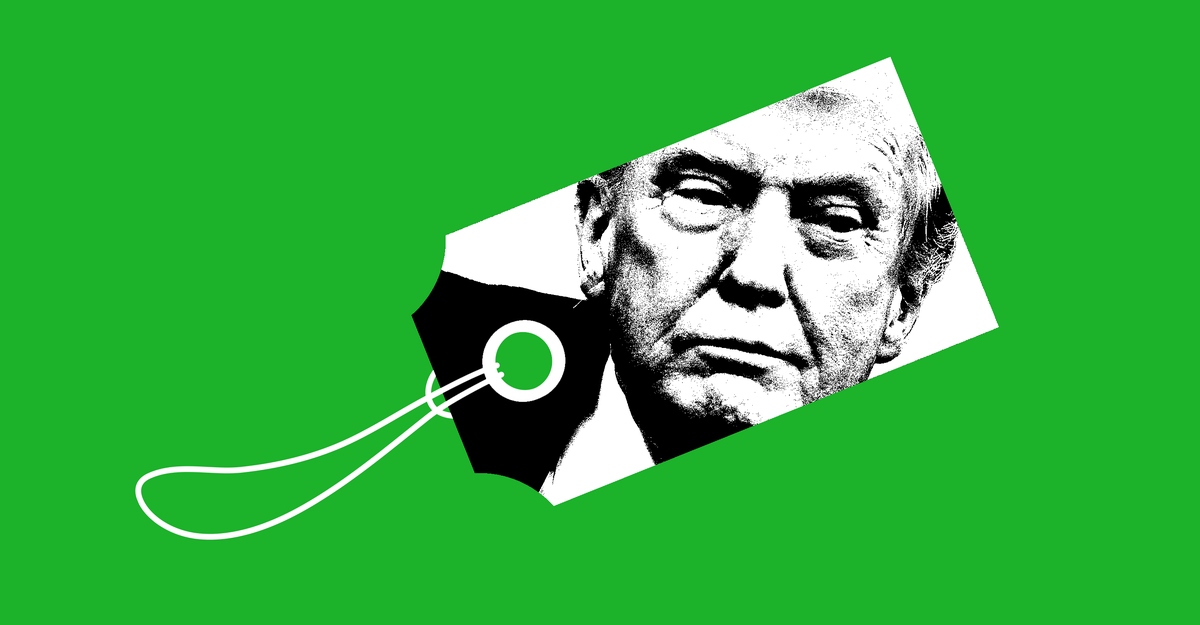
Donald Trump faces his toughest opponent yet
Read original at The Telegraph →After Bill Clinton’s plans were derailed by rising borrowing costs in the early 1990s, his chief strategist, James Carville, quipped that if he were reincarnated, he “would want to come back as the bond market – you can intimidate everybody”.Three decades later, Carville’s remarks still ring true.Rising bond yields have a unique ability to exert power over politicians.
Just think of Liz Truss’s mini-Budget crisis and the sackings, about-turns and resignations that followed a surge in borrowing costs. Yet one world leader so far seems immune to the bond market’s menace: Donald Trump.US 10-year Treasury yields have risen from 3.8pc to 4.2pc over the past 12 months, yet the president so far shows no sign of curbing his ambitions.
The latest move that has unnerved investors is Trump’s vow to sack Federal Reserve governor Lisa Cook over allegations of mortgage fraud, which she has denied.It is part of a broader assault on the central bank’s independence as Trump seeks to bend the Fed to his will.The issue is “definitely gaining investor traction”, according to James Bilson, a fixed-income strategist at FTSE 100 fund manager Schroders.
“We are seeing markets begin to price in moves in the direction of institutional weakening – the politicisation of the Fed.”Bond yields fell at the end of last week after Jerome Powell, the Fed’s chairman, hinted rate cuts were on the way.But yields have gyrated this week as Trump has escalated his feud with Cook, who has refused to go and has launched a legal challenge to the president’s dismissal letter.
Investors fear that political capture of the Fed, once Powell’s term of office expires next May, will allow Trump to push down interest rates at the expense of tackling inflationary forces.Ultimately, that will force higher interest rates further down the line to address the problem. “If Trump succeeds, we will get higher expected inflation, which may sound abstract, but it translates into higher interest rates on car loans, mortgages, student loans, business loans, and certainly Uncle Sam will pay more,” former IMF chief economist Ken Rogoff told the BBC this week.
He warned the world faced an “incredibly destabilising” period if Trump succeeded in watering down Fed independence.David Roberts, head of fixed income at Nedgroup Investments, says investors are “extremely worried [about the] politicisation of the Fed”.“Too cheap money will stoke future inflation,” he adds.
In her lawsuit challenging Trump, Cook’s lawyers argued that the president’s power grab at the Fed could do “irreparable harm” to the central bank in the pursuit of “short-term political interests”.The gap between two-year and 30-year US bond yields – the difference in borrowing costs for shorter and longer-term debt – has now reached its widest since January 2022.
The rate on 30-year bonds is closing in on 5pc, even as the two-year slides to 3.6pc, close to its lowest level since 2022.It is a sign of just how concerned investors are about the longer-term inflation threat and the eroding of the Fed’s independence. Rising long-term borrowing costs carry a political risk for Trump.
American mortgage rates are usually tied to longer-dated bonds as householders tend to borrow over longer terms than in the UK or elsewhere.Higher 10-year and 30-year Treasury yields – the return the government promises to pay a buyer of its debt – would therefore hit “Main Street” America rather quickly, harming many Maga voters in the process.
“We think the bond market holds the real leverage,” says Lale Akoner, global market analyst at eToro.“If investors lose confidence that the Fed will defend price stability, or if fiscal deficits balloon despite tariffs, the bond market can punish Washington with higher yields.”For now, US 10-year and 30-year Treasury yields both remain well below the highs hit in April, in the wake of Trump’s liberation day tariffs.
While longer-dated bond yields are moving higher, they are doing so in an “orderly” way, according to Bilson.Robert Dishner, a portfolio manager at Neuberger Berman, says traders have been comforted by a recent report by the Congressional Budget Office that said the president’s tariffs had already brought in $136bn and would reduce the US primary deficit, excluding interest payment, by $3.
3 trillion over the next decade.“The market currently appears to be a bit less fearful of the fiscal [situation] in the US as tariffs have added to government revenues and haven’t necessarily seen big impacts on growth or inflation,” he says.“They are more focused on places like the UK with the autumn Budget coming up as well as the potential for electoral change in France.
”Jason Borbora-Sheen, a portfolio manager at FTSE 250-listed fund manager Ninety One, says: “There’s decent revenue generation coming through from tariffs, there appears to be an acknowledgement of the importance of medium-to-longer dated bond yields.“I think the Federal Reserve attacks are not good, but there are elements of truth.
”Another reason that bond markets may be relatively calm for now may also be because Trump has shown he is vulnerable to their pressure in the past. When markets went into meltdown in the wake of “liberation day”, the president announced a 90-day pause.“During that tariff episode he did pivot back from the most severe version of tariffs when that 10-year yield moved,” Borbora-Sheen says.
“The market has figured out that it matters to him.”While there is relative calm for now, sentiment can turn on a sixpence and attention will now be focused on Cook’s legal case.“If Cook wins, she stays in place and we achieve some semblance of stability,” Peter Conti-Brown, a professor of financial regulation at the University of Pennsylvania said in a Substack post.
“If she loses ... that’s the end of Fed independence as it has been constructed and reconstructed over 112 years.”In that case, all hell may break lose – and Trump’s resolve to face down the bond market may be truly put to the test.