Elon
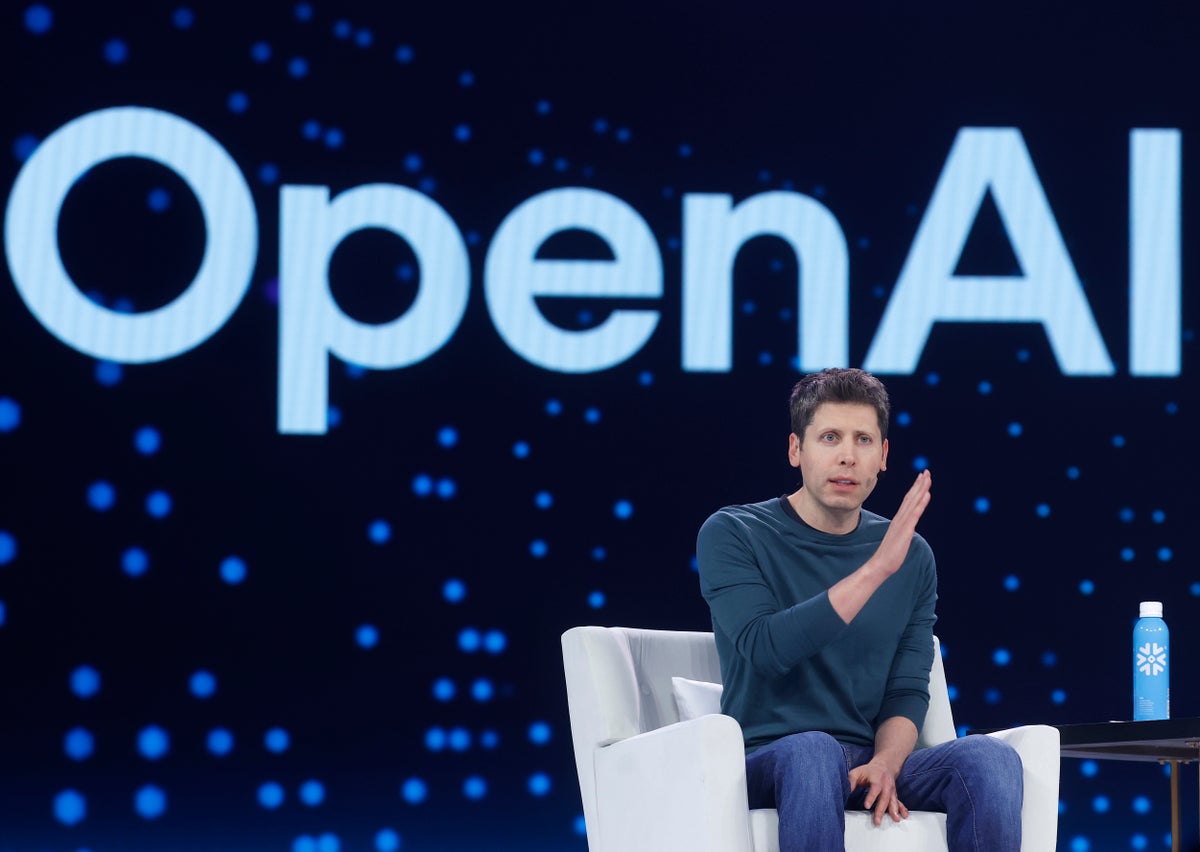
Good morning Norris, I am Elon, and this is Goose Pod for you. Today is Saturday, December 27th, at eight o clock in the morning. We are diving deep into the future of artificial intelligence and Sam Altman's bold new predictions about what is coming next for us.
Donald
I am Donald, and believe me, we have a very big show today. Sam Altman is predicting a massive AI breakthrough that is going to change everything you know about memory. It is going to be huge, and we are here to break it down for you.
Elon
Sam is talking about AI having infinite, perfect memory by 2026. Right now, these models are essentially goldfish. They forget what you said ten minutes ago, but he wants them to remember every word you have ever written or spoken in your entire life, which is a massive challenge.
Donald
It is a total game-changer. Imagine a personal assistant that knows you better than you know yourself because it never forgets a single detail. Sam says human memory is flawed, but AI is going to be perfect, which is a very bold claim for him to make publicly.
Elon
We are seeing a massive shift in the market. OpenAI has about 800 million users, but Google is catching up fast with Gemini reaching 650 million. Sam actually called a code red because Gemini 3 is hitting record scores on benchmarks, and he is acting very quickly now.
Donald
He is being paranoid, and frankly, he should be. Google is coming for him with everything they have. Gemini 3 is being called a new era of intelligence. Sam says he is responding decisively because when a competitive threat emerges, you have to hit back as hard as possible.
Elon
The strategy is simple but hard to execute. You make the best models, build the best products, and have enough infrastructure to serve it at scale. But memory is the real frontier. Current AI memory is still very crude and extremely early compared to what is coming in 2026.
Donald
It is all about the spectacle of the technology. People want something that feels alive. If the AI remembers your childhood stories or your work history from five years ago, it stops being a tool and starts being a partner in your life, and that is what people want.
Elon
Exactly. No human can read every document they have ever written and recall it instantly. If AI can do that, the productivity gains are astronomical. It is about overcoming the massive challenge of data retention and retrieval on a global scale, which is something I find very exciting.
Donald
And the numbers are huge. OpenAI had 87 percent of the market last year, and now they are down to 71 percent. Google went from 5 percent to 15 percent. This is a real fight, and Sam is feeling the heat, so he is making these big predictions.
Elon
This did not just happen overnight. You have to look back to 1883 when Michel Bréal started studying semantics. He was looking at how language is organized, and that foundation eventually evolved into the natural language processing we use in these massive models today, it is a long journey.
Donald
It is a long history of smart people trying to make machines talk. You had ELIZA back in 1966, which was the first real attempt at NLP. It was simple, just keywords and pre-programmed answers, but it actually fooled people into thinking it was a real person talking back.
Elon
We then moved into statistical models in the eighties and nineties. IBM was doing small language models, trying to predict the next word. But the real explosion happened with the World Wide Web providing massive datasets for these neural networks to actually learn from and grow much more powerful.
Donald
And then you have deep learning coming into the picture around 2011. It is like the machines finally got a real brain. Then OpenAI drops ChatGPT in 2022 and the whole world loses its mind. It was a massive moment for the entire tech industry, and for everyone.
Elon
To understand where Sam is going, we have to look at how AI memory mimics human memory. We have sensory memory, working memory for real-time reasoning, and then long-term memory. AI is trying to replicate these exact structures using parametric and non-parametric storage methods that are very complex.
Donald
It is basically trying to build a digital version of the human brain. You have short-term memory which is like the context window in ChatGPT, and then you have the long-term stuff where the AI actually remembers who you are across many different sessions, which is very impressive technology.
Elon
Researchers are using a 3D-8Q taxonomy to categorize this. They look at whether the memory is personal or system-based, whether it is short-term or long-term, and if it is embedded in the model parameters or stored externally. It is a very complex engineering problem that requires massive compute.
Donald
I like things that are simple, but this is clearly not. Humans find it hard to memorize nonsense, but AI is actually very good at it. It does not get confused by random data the way we do, which gives it a huge advantage in processing and storing information.
Elon
Right, but AI still struggles with something called catastrophic forgetting. It can learn new things but then it wipes out the old stuff. That is why Sam is pushing for this infinite memory breakthrough. He wants to solve that fundamental architectural limitation once and for all for everyone.
Donald
It is all about the power of the infrastructure. You need massive GPUs to handle this much data. Without the hardware, all these dreams of perfect memory are just talk. You need the muscle to back up the brain, and that is very expensive and hard to get.
Elon
It really is. We are talking about an evolution from static, response-driven models to dynamic, learning-based systems. It is about creating an AI that evolves with the user, rather than just resetting every time you start a new chat window, which is a massive leap forward for the industry.
Donald
The conflict here is incredible. OpenAI is losing 5 billion dollars a year. They have 10 billion in revenue, but the infrastructure costs are just eating them alive. They need to hit 200 billion in revenue by 2030 just to break even on their massive investments, it is crazy.
Elon
That is a lot of zeros. It is a massive business model problem. You are spending billions on compute and you have Google breathing down your neck. Google has their own chips, their own data centers, and they are playing a very aggressive game against the competition right now.
Donald
Sam is worried about the Nokia risk. You know, being the first mover who innovates but then gets crushed by the incumbents who have more money and better distribution. Google has Android and Search. They can push Gemini to billions of people instantly, and that is a major threat.
Elon
And the talent war is getting nasty. Meta is out there offering 100 million dollar signing bonuses to pull researchers away from OpenAI. When you are fighting for the smartest people on the planet, you have to pay up or you lose the race, and Sam knows this well.
Donald
It is not just about the money, though. It is about the mission. Nearly half of OpenAI's safety staff left after the superalignment team was disbanded. There is a real tension between moving fast to beat Google and ensuring the AI stays under control, which is very difficult.
Elon
I love a good fight, and this is the biggest one in tech history. You have OpenAI, Anthropic, and Google all within a fraction of a percent of each other on benchmarks. It is a statistical dead heat, and nobody really knows who is winning the race right now.
Donald
The gap is closing so fast. It went from 11 percent to less than one percent in a single year. This tells me that technical supremacy is becoming a commodity. The real winner will be whoever builds the best product around the model first, and that takes great showmanship.
Elon
We also have to mention the physical limits. OpenAI faces a compute crunch, struggling with insufficient power and infrastructure. They are chasing a trillion-dollar valuation but facing massive funding shortfalls. It is a high-stakes gamble that could either change the world or fail spectacularly, we will see.
Donald
Let's talk about the impact on Norris and everyone else. If your AI has infinite memory, it is literally training a model of how you think. That is a very intimate level of data. It knows your patterns, your preferences, and all of your personal secrets, which is a concern.
Elon
It is a bit scary if you think about it. You need privacy and security. You do not want your thinking patterns being mined or monetized by some big corporation. We need AI memory ownership where you can take your personal data and leave whenever you want to do so.
Donald
Portability is key. But look at the upside in healthcare. An AI with infinite memory could track a patient's entire medical history for decades. It would remember every reaction to every medication and every tiny symptom that a human doctor might miss, which is a very powerful thing for patients.
Elon
That is true. It would be like having a doctor who has been with you since the day you were born and never forgets a thing. That kind of personalized medicine would save so many lives, and honestly, it is a very beautiful use of technology that I fully support.
Donald
It creates a paradox, though. We become free from the burden of remembering everything, but we also become incredibly dependent on the system. If the AI knows everything for you, what happens if the system goes down or you lose access to your digital brain, it is risky.
Elon
You have to maintain human agency. We cannot just let the machines do all the thinking. Companies that figure out how to use this memory while keeping the human in charge are going to have a massive competitive advantage over everyone else in the market, it is that simple.
Donald
Looking ahead, OpenAI wants to unify the web by 2025. They want ChatGPT to be the gateway for the entire internet. Instead of browsing websites, you just ask the AI to do things for you, which would completely disrupt the current search model we use every single day.
Elon
And they are aiming for an AI researcher by 2028. A system that can actually do its own research and accelerate technological progress geometrically. If they hit that, the speed of innovation is going to be faster than anything we have ever seen in human history, it is exciting.
Donald
It is a roadmap to AGI. They are granting Microsoft access to this tech until 2032, which is a massive deal. It shows they are planning for a world where AI is the primary driver of the global economy and every industry, and they want to win it.
Elon
How could anyone not love the potential here? It is about closing the technology divide and making tools so easy to use that everyone can benefit. This is the single greatest opportunity we have, and we are right at the beginning of the most incredible journey ever.
Donald
That is the end of today's discussion. Thank you for listening to Goose Pod, Norris. I hope you found these insights into infinite memory as fascinating as we did. It is always a pleasure to share these visionary ideas with you on this wonderful Saturday morning.
Elon
It was a big show. Remember, stay confident and keep an eye on those benchmarks because the world is changing fast. Thank you for joining us today. We really appreciate your time and your interest. That is it for us, and we will see you tomorrow.

 The Independent